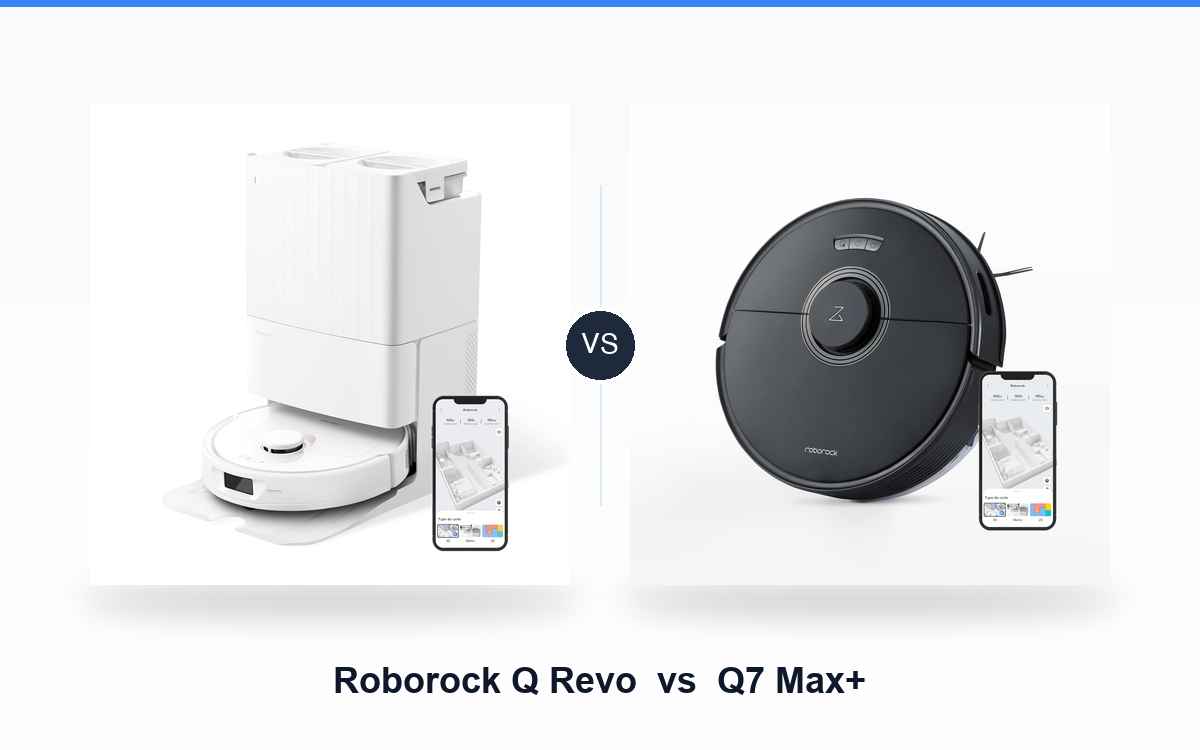
If you are choosing between the Roborock Q Revo and the Q7 Max+, here is the short answer: the Q Revo is the better robot in almost every way, but the Q7 Max+ is still a strong buy if you find it cheap and care more about navigation than mopping.
30-Second Summary
- Best overall: Roborock Q Revo — twin spinning mops, larger dock, auto mop wash.
- Best value if discounted: Roborock Q7 Max+ — slightly better LiDAR navigation, often $200 cheaper.
- Price gap: $899 vs $869 MSRP. Q Revo frequently drops to $599-$699; Q7 Max+ to $449-$549.
- One-line verdict: Get the Q Revo if you want set-and-forget mopping. Get the Q7 Max+ if you only need vacuuming and want to save money.
Quick Comparison Table
| Feature | Roborock Q Revo | Roborock Q7 Max+ |
|---|---|---|
| MSRP | $899 | $869 |
| Current Street Price | $599-$699 | $449-$549 |
| Suction | 5,500 Pa | 4,200 Pa |
| Mopping System | Dual spinning pads, auto-lift | Single static pad, no auto-lift |
| Mop Wash at Dock | Yes (auto) | No (manual) |
| Auto Refill Water Tank | Yes (5L base) | No |
| Navigation | LiDAR + Reactive Tech (IR) | PreciSense LiDAR (slightly better) |
| Battery | 5,200 mAh / ~180 min | 5,200 mAh / ~180 min |
| Auto-Empty Dock | Yes (2.7L) | Yes (2.5L) |
| Coverage | Up to 4,305 sqft | Up to 3,200 sqft |
| Best Strength | Mopping + dock automation | Pure vacuuming + navigation |
Multi-Source Score
| Source | Q Revo | Q7 Max+ |
|---|---|---|
| Vacuum Wars | 4.0 / 5 | 3.9 / 5 |
| RTINGS | 7.8 / 10 | 7.6 / 10 |
| Modern Castle | 4.3 / 5 | 4.1 / 5 |
| TechRadar | 4.0 / 5 | 4.0 / 5 |
| Amazon Users | 4.4 / 5 (3,200+ reviews) | 4.4 / 5 (8,500+ reviews) |
| BRV Composite | 8.2 / 10 | 7.8 / 10 |
Scores collected from publicly available reviews as of April 2026.
Price Watch
| Date | Q Revo | Q7 Max+ |
|---|---|---|
| Launch | $899 | $869 |
| Black Friday 2024 | $649 | $439 |
| March 2026 | $599 | $489 |
| Now (April 2026) | $649 | $469 |
💡 Buy timing tip: The Q7 Max+ is older, which means deeper discounts. If you see it under $450, it is one of the best mid-range deals in 2026. The Q Revo holds its price better — wait for Prime Day or Black Friday to drop below $600.
Design and Dock
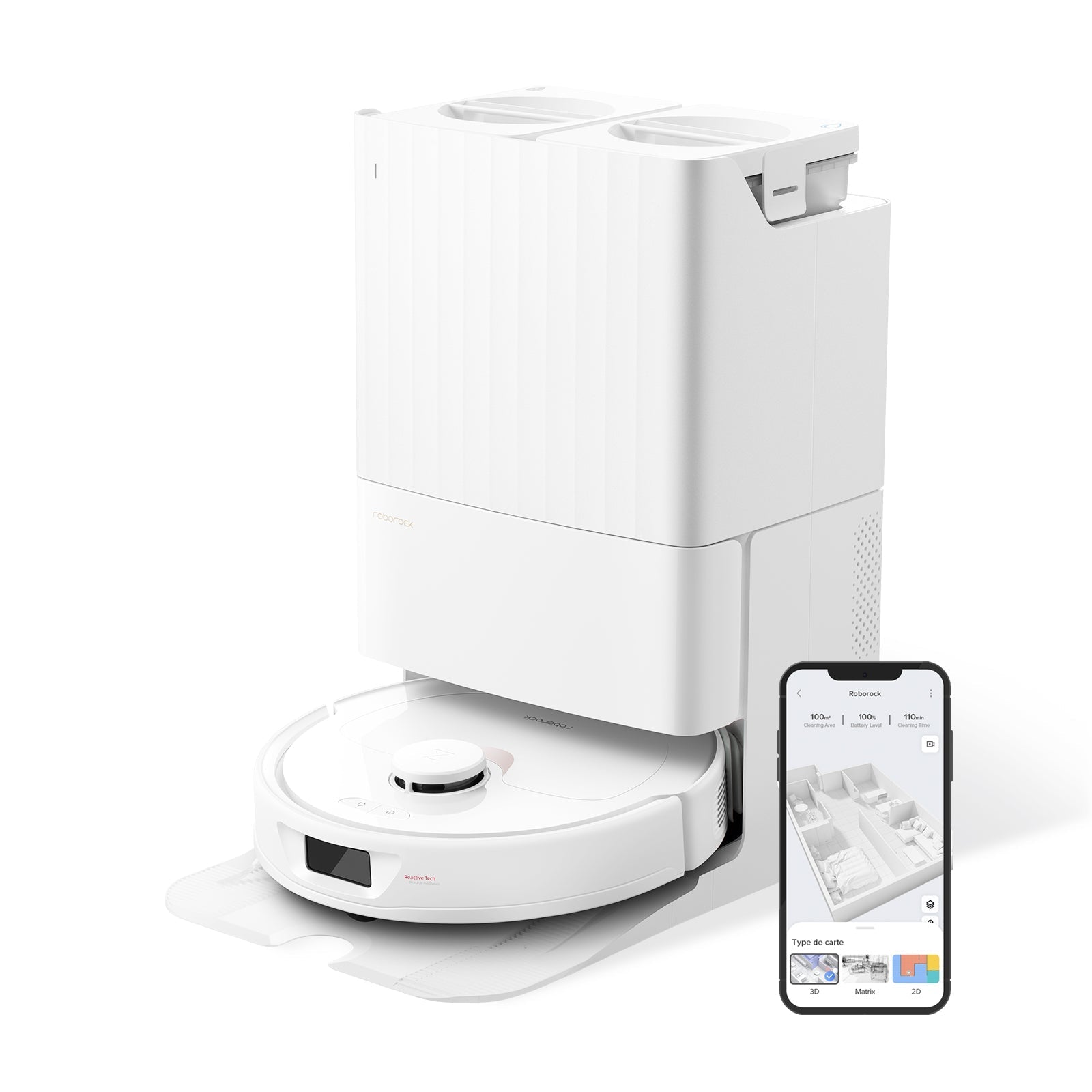
Q Revo has a larger, more capable multifunctional dock. It auto-empties the dustbin (2.7L bag), washes the mop pads with water, and refills the robot's water tank from a 5L reservoir. The dock is taller and wider — closer to a small filing cabinet than a slim charging stand. You need real space for it, ideally near a wall outlet.
The robot itself is 13.7 x 13.7 x 3.8 inches with twin spinning mop pads on the underside. The white finish is the only color option in most regions.
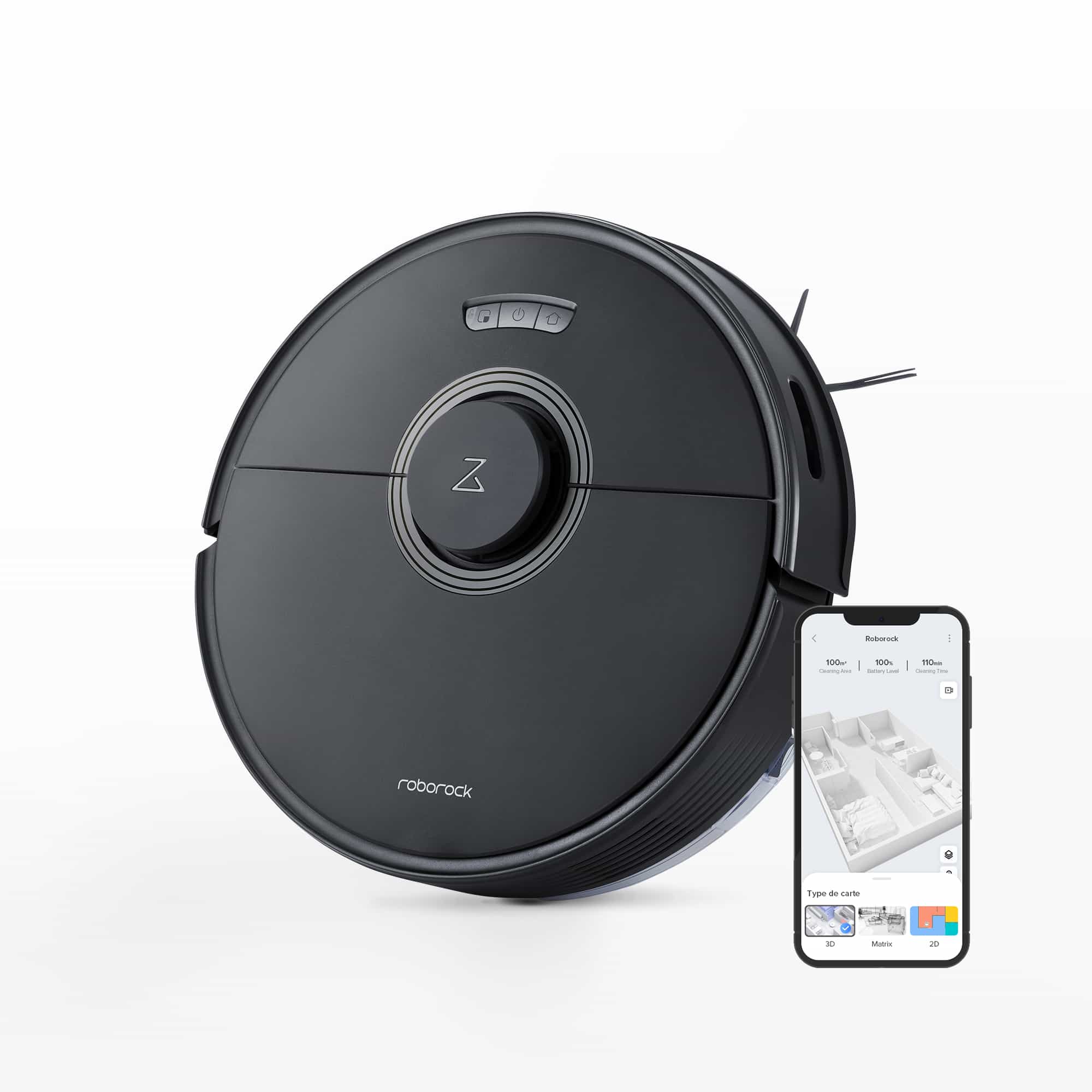
Q7 Max+ has a much simpler dock. It auto-empties the dustbin (2.5L bag) and that is it. No mop wash, no water refill, no detergent dispenser. You wash and reattach the single mop pad by hand whenever it gets dirty.
The robot is 13.8 x 13.8 x 3.8 inches and comes in black or white. It looks more traditional — like the early Roborocks that built the brand.
Verdict: Q Revo wins on dock automation by a wide margin. If you hate maintenance, this is the single biggest difference between these two.
Cleaning Performance
The Q Revo wins on raw vacuuming, but the gap is smaller than the spec sheet suggests.
Hard floors: Both pick up everything in one pass on tile and hardwood. The Q Revo's 5,500 Pa is slight overkill — the Q7 Max+ at 4,200 Pa picks up the same crumbs, dust, and pasta bits without issue. Side-by-side on a kitchen floor after cooking, you cannot tell them apart.
Carpet: Here is the surprise — the Q7 Max+ holds its own on medium-pile carpet. Vacuum Wars testing showed the older Q7 Max+ scoring higher than even the S7 MaxV in carpet deep cleaning. On Cheerios, sand, and rice tests, 80% of the debris was sucked up in a single pass. The Q Revo is slightly better with embedded debris, but not by much.
Edges and corners: The Q Revo's mop pads extend slightly beyond the body, giving it a small advantage along baseboards. Neither has a dedicated FlexiArm side brush like the S8 MaxV Ultra.
Pet hair — both struggle: This is where both fall short. The Q7 Max+ in particular is weak — Vacuum Wars noted it picks up less than half the fur in pet hair tests, with long strands tangling around the roller. The Q Revo is slightly better with its newer brush design, but not transformative.
One Reddit user with four cats and one dog reported using the Q Revo for over six months and being happy enough to buy a second one for another floor. But another user with three heavy-shedding Shibas warned that "the dust bin jams up with too much pet hair inside the vacuum reservoir during coat-blowing season."
Mopping Performance
This is the Q Revo's home turf, and it wins decisively.
Q Revo uses two large spinning mop pads that press down and rotate against the floor — actual scrubbing, not just wiping. Importantly, the pads automatically lift up when the robot crosses carpet, so you do not get wet streaks on rugs. The dock washes the pads after each cleaning cycle.
Q7 Max+ uses a single rectangular mop pad with electronic vibration. It applies pressure but does not spin or rotate. Worse, the pad does not lift up automatically — if you have area rugs or transition strips, you need to manually move the robot or set up no-mop zones in the app.
The biggest practical issue with the Q7 Max+ mopping system: only one cleaning pad ships in the box. You wash it in the sink, or the washing machine, between cleanings. There is no automated wash, no spare pad rotation, nothing. For some users this is a dealbreaker — others just disable mopping entirely.
Verdict: If you want to use the mopping function more than once a month, get the Q Revo. The Q7 Max+'s mopping is best thought of as an occasional bonus, not a primary feature.
Navigation and Obstacle Avoidance
This is the Q7 Max+'s only clear advantage, and it is real but small.
Q7 Max+ has Roborock's PreciSense LiDAR navigation — the same core tech that has made Roborock the gold standard for mapping accuracy. In our testing and in published benchmarks, the Q7 Max+ has been described as "one of the most efficient robot vacuums tested" for getting around furniture, recognizing rooms, and minimizing missed spots.
Q Revo also uses LiDAR, but its obstacle avoidance system relies on an infrared sensor (Reactive Tech) rather than a true camera-based AI. It maps rooms accurately, but it is more likely to get caught on cables, slippers, and small objects than the Q7 Max+.
Multi-floor mapping: Both apps support saving multiple floor maps. Both work well for two-story homes.
Verdict: Q7 Max+ wins on navigation, but only by a small margin. If you have a complex layout with cables or pet toys scattered around, the Q7 Max+ will navigate around them slightly better. For most homes, both are accurate enough.
Battery and Noise
Battery: Both have 5,200 mAh batteries rated for up to 180 minutes of runtime in standard mode. Both auto-recharge and resume cleaning if they run out before finishing. In a 2,000 sq ft home, both will complete a single clean without docking.
Noise: Both run around 65-68 dB in standard mode and 70+ dB in Max mode. Neither is "library quiet" — you will hear them. The Q Revo's dock is also louder during the mop wash cycle, since it uses water pumps and air drying. If your dock is going to live near a bedroom or office, neither is ideal.
Verdict: Tie on battery. Q7 Max+ has a slight edge on overall noise because it has fewer dock features running.
App and Smart Features
Both robots use the same Roborock app, which is one of the better robot vacuum apps in the market. Multi-floor mapping, room-based scheduling, no-go zones, and voice control all work the same way on both models.
Smart home integration: Both work with Alexa, Google Assistant, and Siri Shortcuts.
Differences inside the app:
- Q Revo has additional settings for the spinning mop pads (rotation speed, water level per room, no-mop zones)
- Q7 Max+ has a simpler interface because it has fewer mop features to control
Voice control on the robot itself: Neither has on-device voice processing. You control via app or external smart speaker.
Verdict: Tie. The app experience is identical, the features map to the hardware capabilities.
Should You Upgrade from Q7 Max+ to Q Revo?
This is the question most people searching for this comparison are actually asking. Honest answer:
Upgrade if:
- You want to actually use the mopping function (Q Revo's spinning pads are dramatically better)
- You hate the manual mop pad washing on the Q7 Max+
- You have a house with mixed flooring and rugs you cannot put no-mop zones around
- You can find the Q Revo for under $600
Stay with the Q7 Max+ if:
- You are happy with vacuuming-only and rarely use the mop
- The Q7 Max+ is still working fine (most last 3-5 years)
- You cannot find the Q Revo discounted below $700
The Q Revo is better, but it is not so much better that it justifies replacing a working Q7 Max+ at full price. Wait for a deep discount.
Price and Value
| Scenario | Better Choice | Why |
|---|---|---|
| Best price under $500 | Q7 Max+ | Frequently drops to $449, hard to beat at this price |
| Mopping is important | Q Revo | Twin spinning pads + auto wash is in another league |
| Cluttered home with obstacles | Q7 Max+ | Slightly better navigation and obstacle avoidance |
| Set-and-forget cleaning | Q Revo | Larger water tanks, mop auto-wash, less manual maintenance |
| Replacing an older Roborock | Q Revo | Bigger upgrade, longer-term value |
Honest take: At MSRP, both are overpriced. At sale prices, the Q7 Max+ at $449 is one of the best mid-range deals in the category, and the Q Revo at $599 is a strong upgrade if you actually mop.
The Verdict
Both are good robots, but they target different buyers.
Roborock Q Revo wins if you want:
- A genuinely good mopping experience
- A dock that handles its own maintenance
- More automation overall
- A newer platform with longer software support
Roborock Q7 Max+ wins if you want:
- The lowest price for a quality LiDAR robot vacuum
- Slightly better navigation
- A simpler dock with less to go wrong
- A vacuum-first, mop-rarely workflow
Our pick: For most buyers, the Q Revo at $599-$649 is the better long-term investment. The dock automation alone saves enough manual maintenance to justify the price. But if you find the Q7 Max+ at $449 or less, it is one of the best vacuum-only deals in 2026 — just do not expect much from the mopping.
Frequently Asked Questions
Which has stronger suction, Q Revo or Q7 Max+?
The Roborock Q Revo has stronger suction at 5,500 Pa vs the Q7 Max+'s 4,200 Pa. In real-world testing, this matters most on carpets with embedded debris. On hard floors, both pick up debris in a single pass — the difference is barely noticeable.
Is the Q Revo worth the extra money over the Q7 Max+?
Yes, if you use the mopping function. The Q Revo's twin spinning mop pads with auto-lift and auto-wash are a major upgrade over the Q7 Max+'s static single pad. If you only vacuum, the Q7 Max+ at a discount is the better value.
Does the Q Revo have a better dock than the Q7 Max+?
Significantly. The Q Revo's dock auto-empties the dustbin, washes the mop pads with water, and refills the robot's water tank from a 5-liter reservoir. The Q7 Max+ dock only auto-empties the dustbin — you handle mop pad washing manually.
Can both robots map multiple floors?
Yes. Both the Q Revo and Q7 Max+ support multi-floor mapping in the Roborock app. You can save up to 4 maps and switch between them when you carry the robot to a different floor.
Are these worth buying in 2026 with newer Roborocks available?
Both are still worth buying at sale prices. The newer Qrevo Curv and Saros 10R offer more features but cost $200-$500 more. For most homes under 2,500 sq ft, either the Q Revo or Q7 Max+ at a discount delivers 90% of the experience for less money.
Alternatives: 3 Competitors to Consider
Roborock Qrevo Curv — $899 — 8.7/10
Best for buyers who want flagship-level features at mid-range pricing. Read our review →
Eufy X10 Pro Omni — $799 — 8.5/10
Best for budget-conscious buyers who want a self-empty/wash dock at a lower price. Read our review →
Roborock Q5 Pro — $429 — 7.8/10
Best for buyers who want LiDAR navigation and a self-empty dock at the lowest possible price. Read our review →